Solo Exhibition | Mint Gallery, California Institute of Arts | April 2026
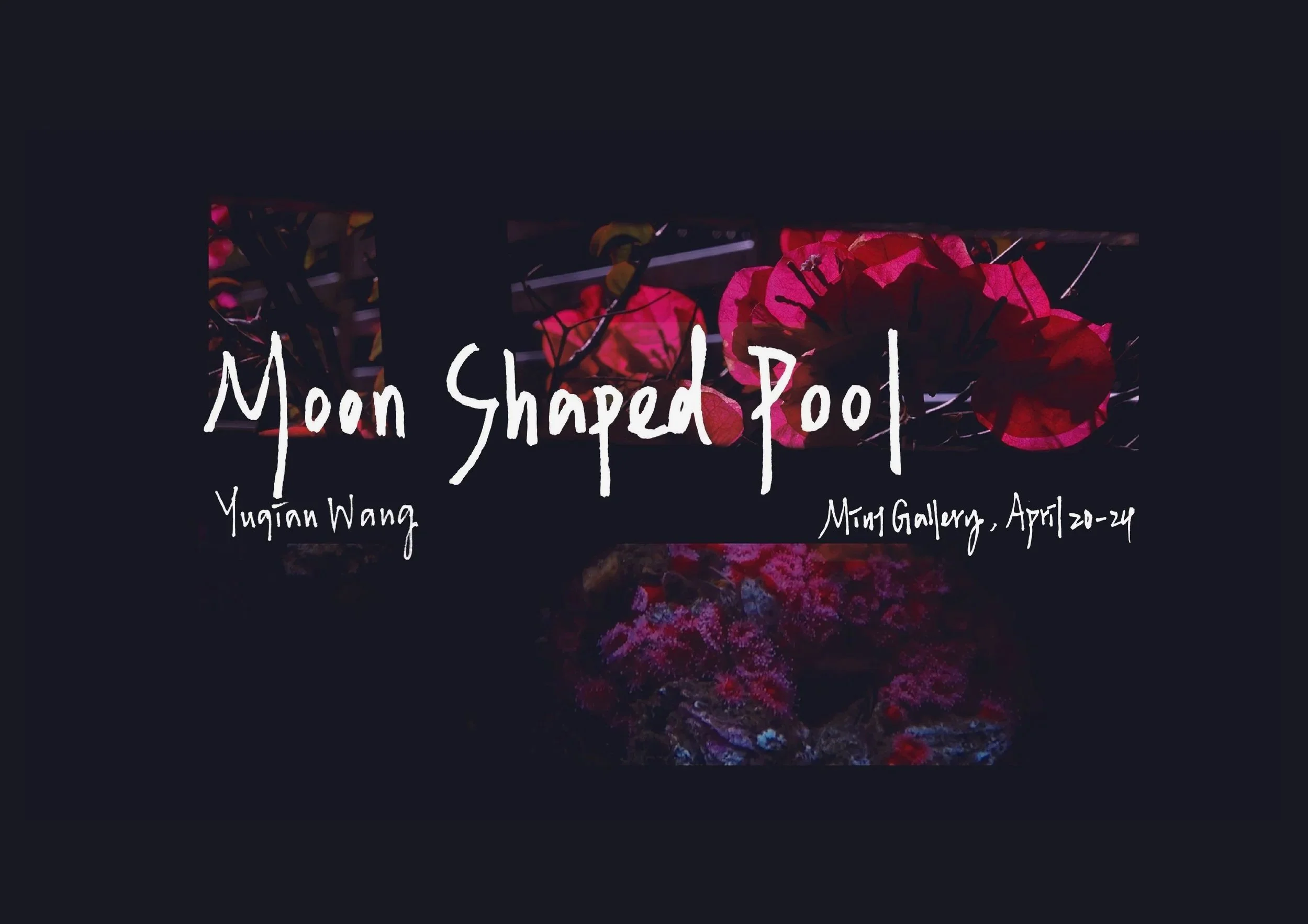
Moon Shaped Pool
Moon Shaped Pool is an installation which features three time-based works that interrogate the nature of viewership.
By orchestrating distinct physical and sensory environments, the exhibition examines how the mechanics of observation and technological mediation influence our internal landscapes, asking:
How does experience shape perception?
Like the reflection in a moon-shaped pool,
the exhibition offers only the surface instead of the source.
Video A: Eye Exam (4:00)
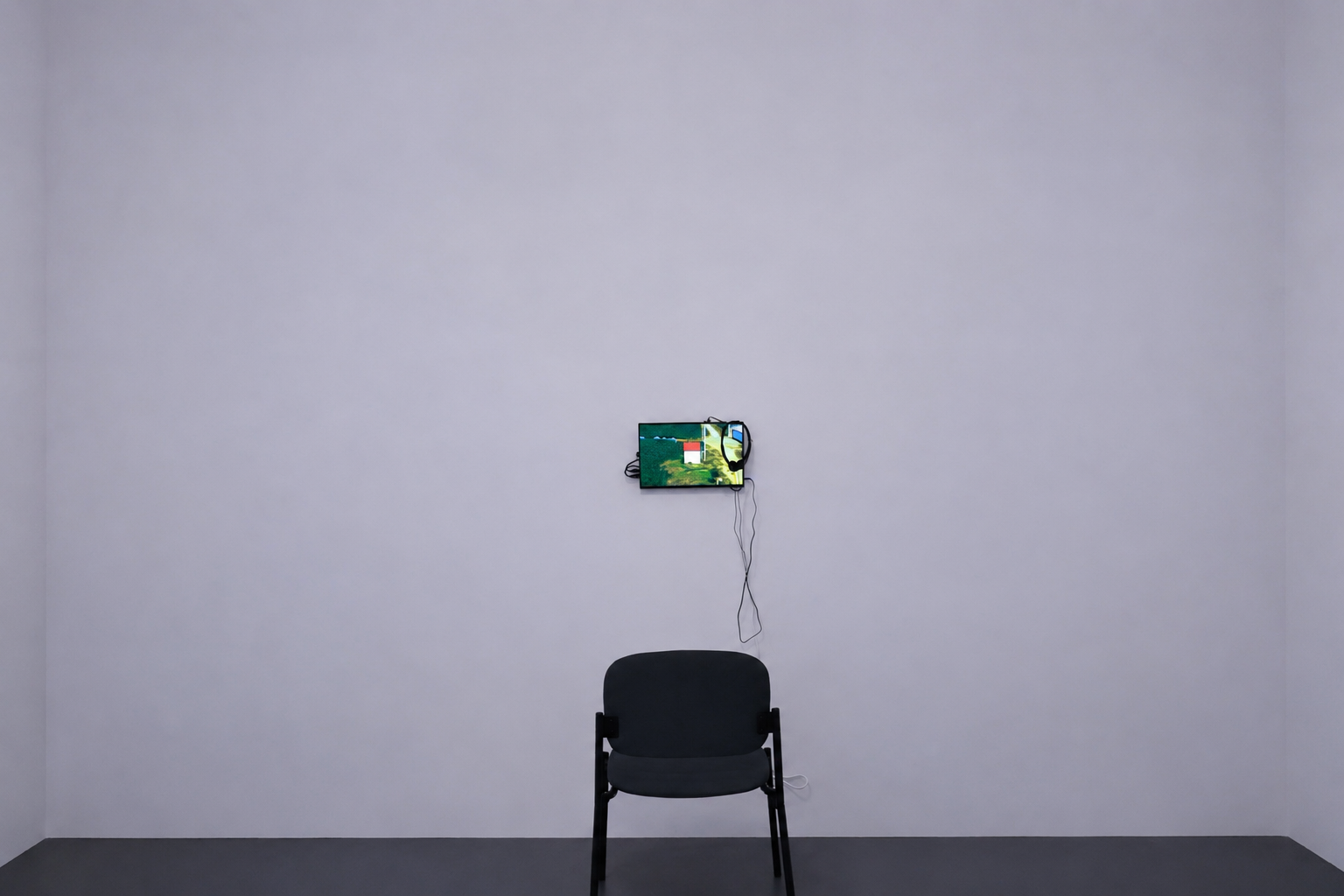
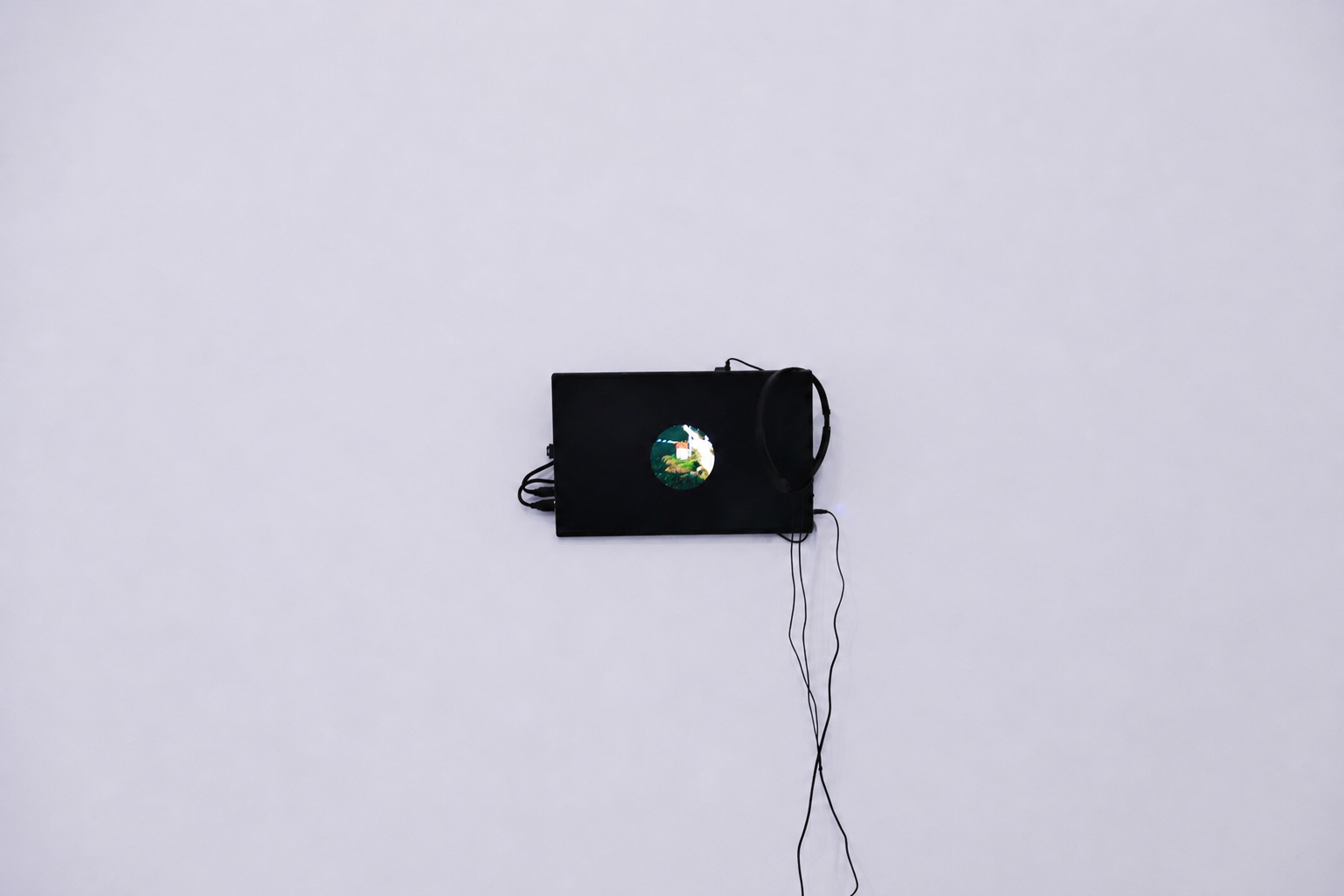
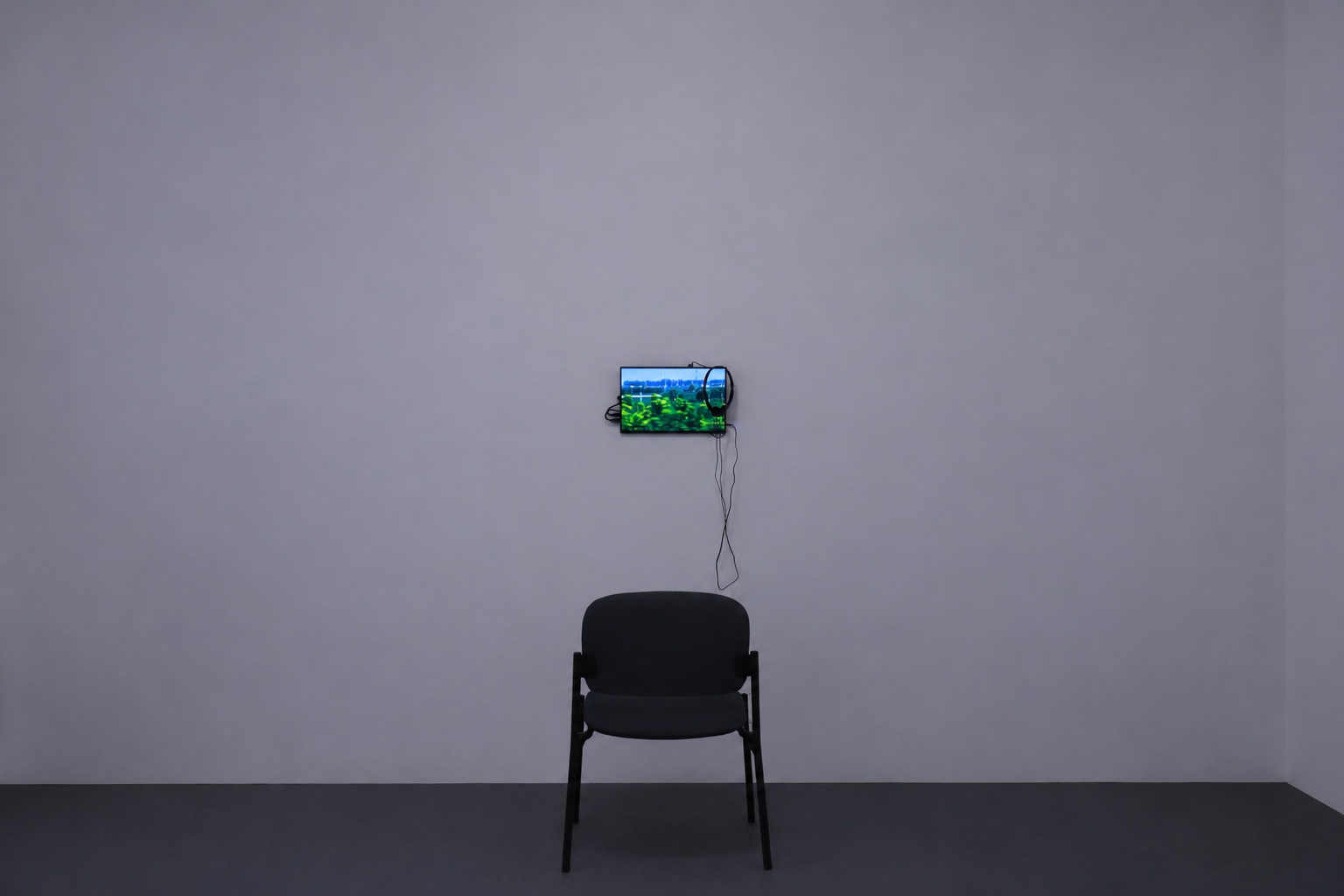
Eye Examis an experimental film embedding subjective experience within a time-based medium. Replicating a clinical eye examination prior to surgery, the work comprises three tests from a first-person perspective. To reconstruct this subjective vision, I ultimately abandoned digital animation for a more physical process: compiling materials into a PowerPoint and re-filming the screen. Manual focus adjustments mimic the human eye, obstructions simulate blinking, and slight camera trembling stands in for breath. This process is an effort to return to the body through a form of experience that cannot be fully automated. The sound design features precise beeps, abrupt edits, and a cold, AI-generated voiceover delivering instructions.
During Test B, jump cuts insert fragments of personal memory. The train footage was shot in the summer of 2025, during a solo journey from south to north in China. This rural landscape begins to resemble an imagined, unreachable place before being abruptly cut short by Test C. This return to the clinical tone mirrors perception itself: gone before it can be held, leaving only a vivid trace.
Installation: Presented on a small, wall-mounted monitor at eye level. Sound is delivered through a wired headphone connected to the monitor. A single chair sits directly in front of the screen; the viewer is invited to sit, put on the headphones, and press play to begin. Facing the monitor and turning their back to the rest of the gallery, the viewer is closed off from Video B and Video C for the duration of the work. This constrained, deliberate posture mirrors the clinical logic of the work.
Video B: Garden (2:40)
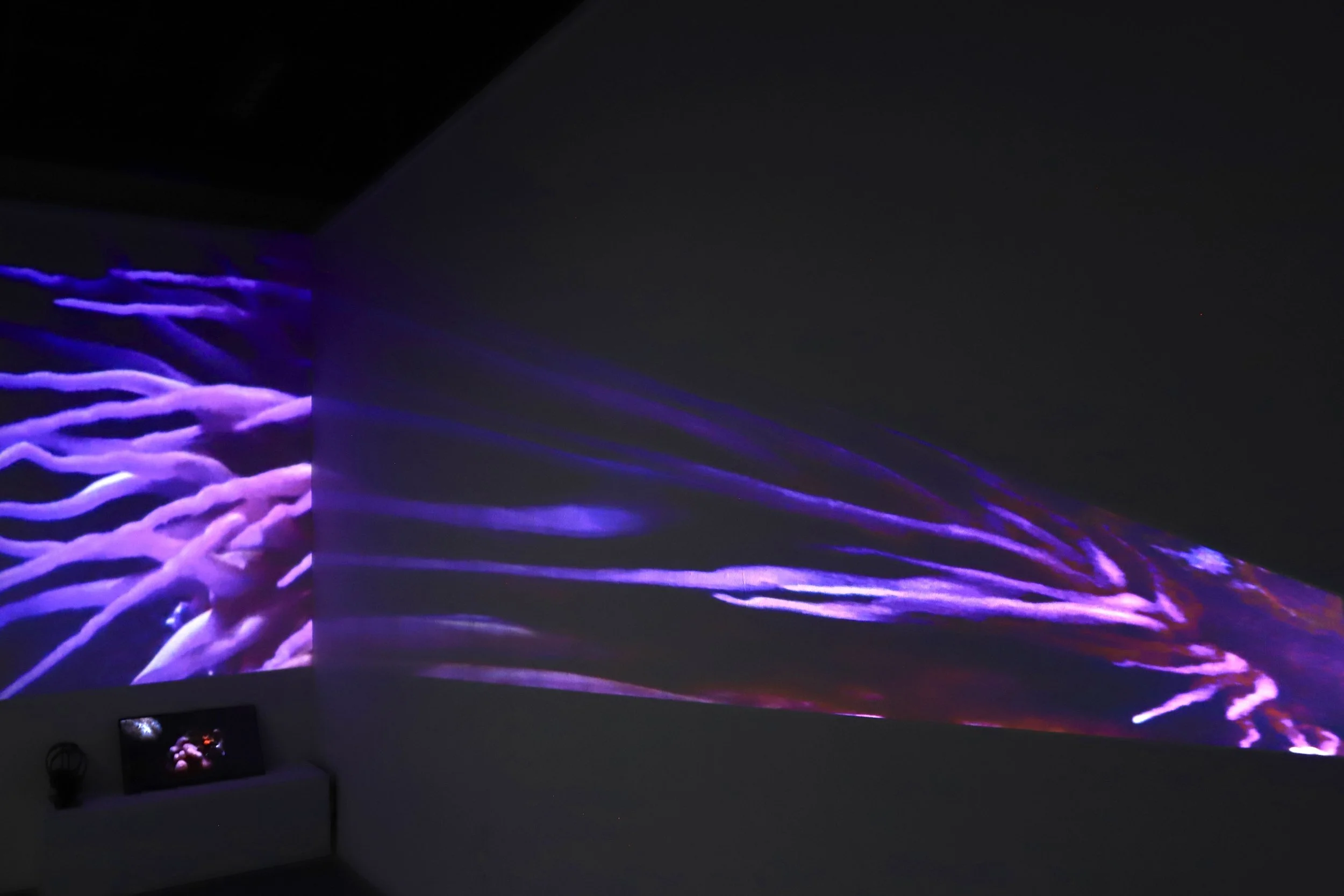
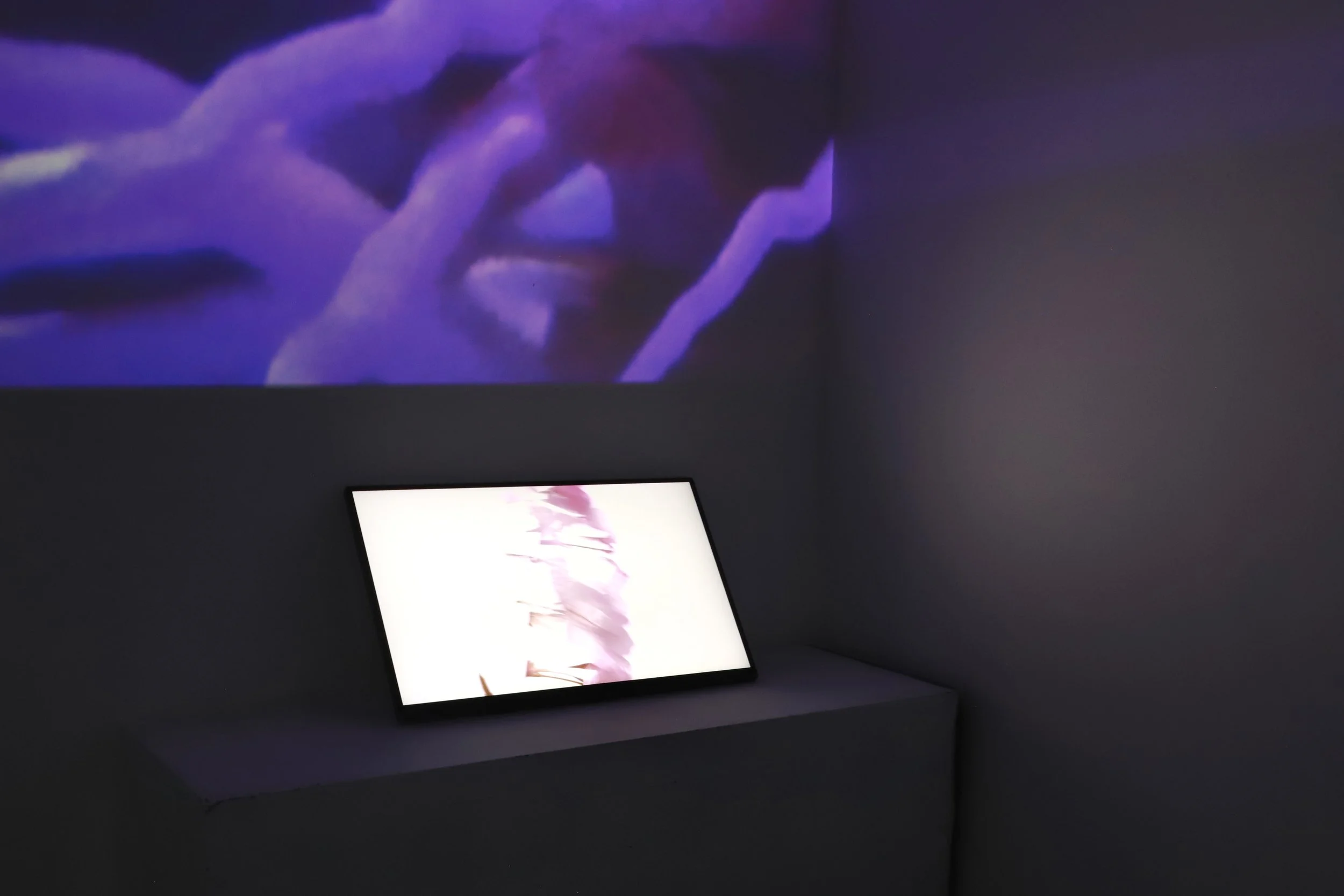
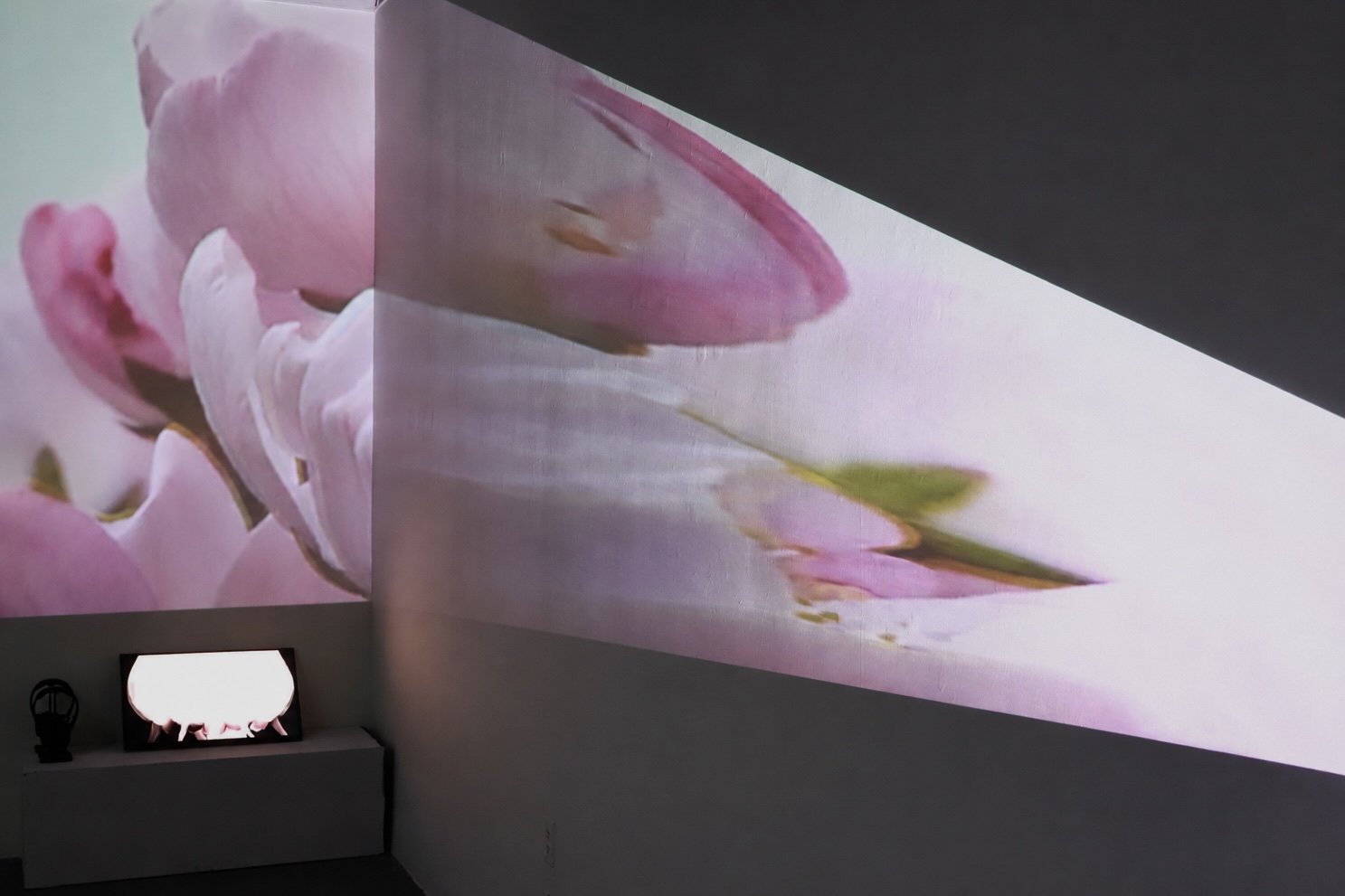
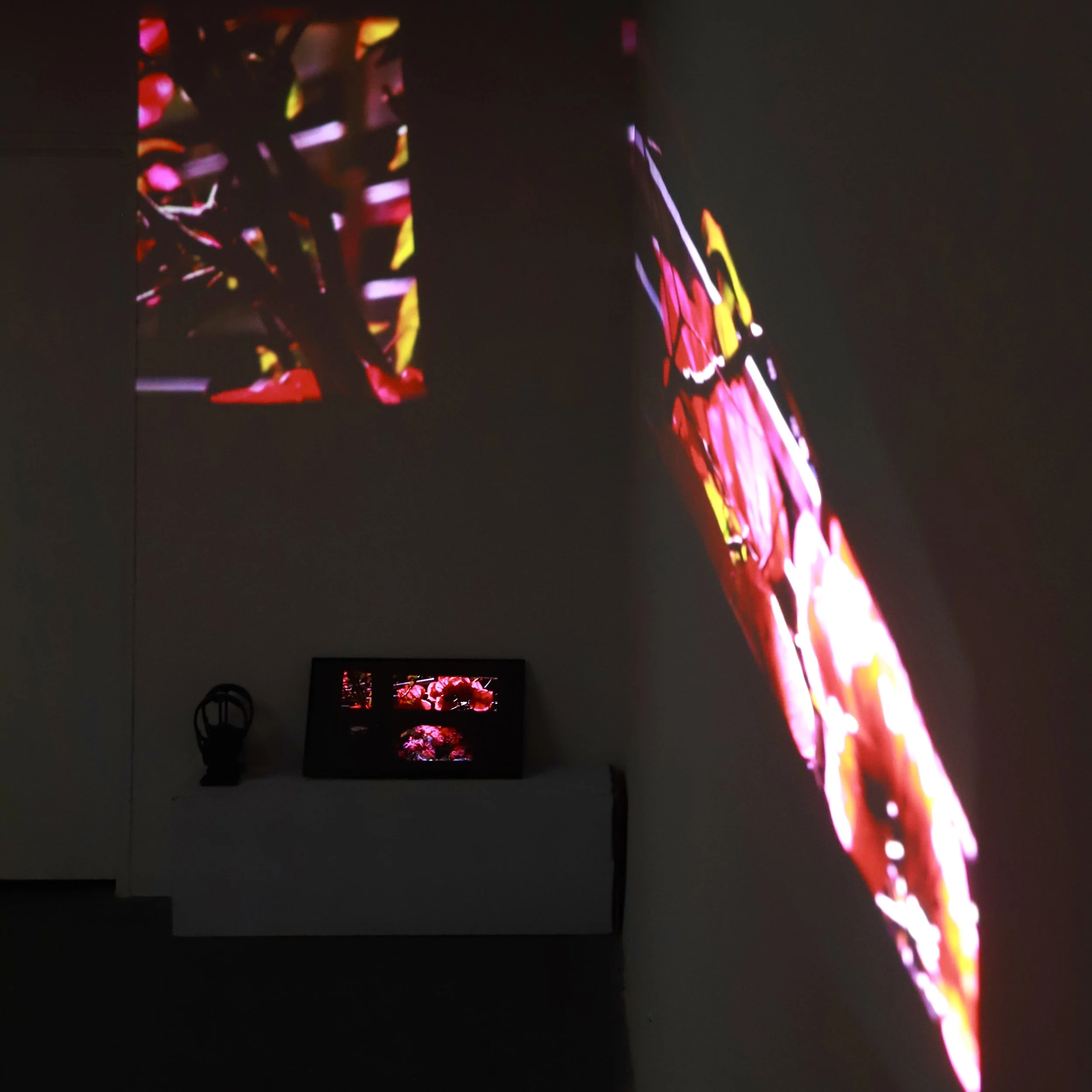
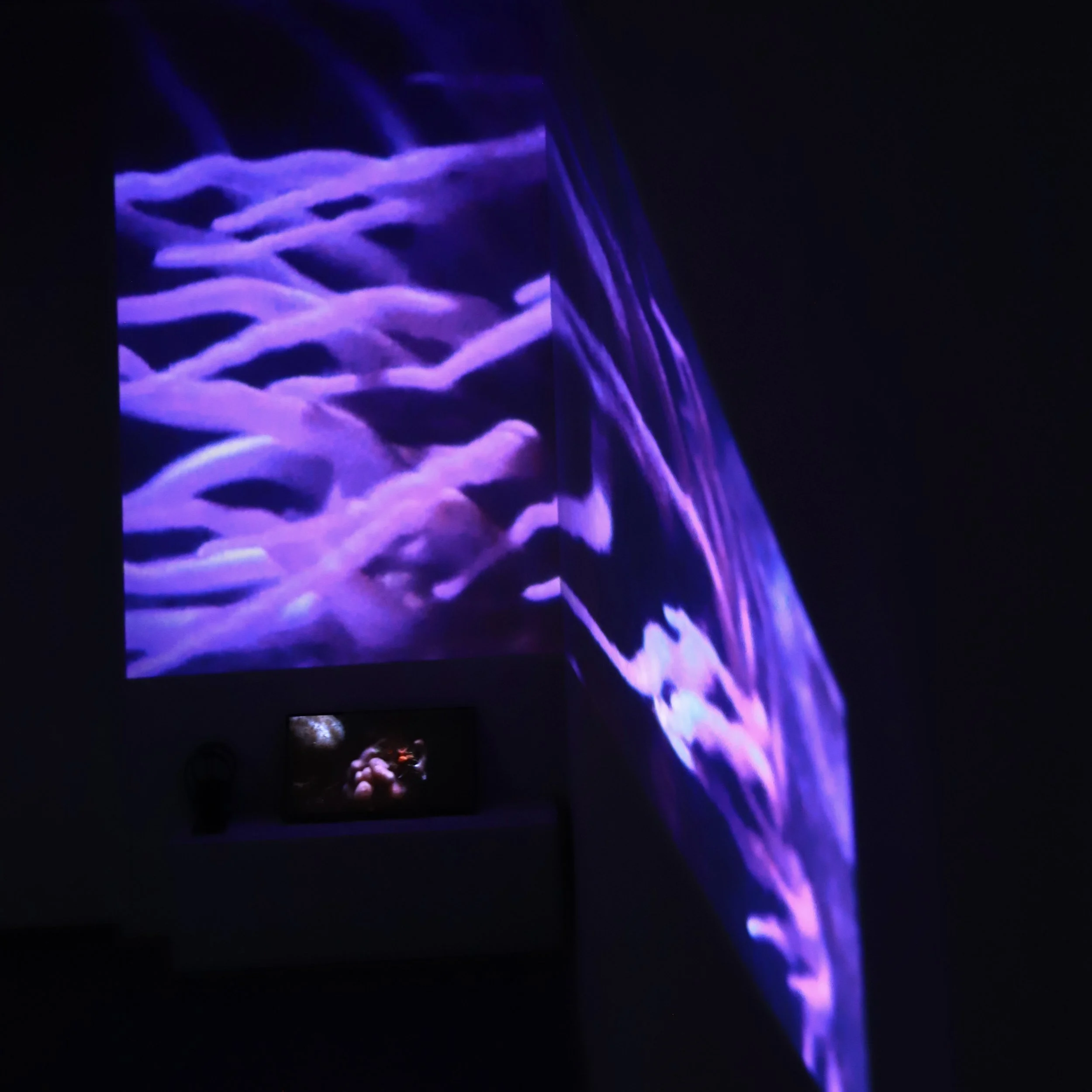
Garden unfolds within a threshold space that lies between waking reality and dream. In this film, I attempt to give partial structure to my own subconscious, turning abstract states into material forms through image, sound, and fragmented language. Creatures from an aquarium and plants outside my home inhabit the same dark and vivid environment. Coral and roses, cherry blossoms and jellyfish, sea anemones and hyacinths appear together, reorganizing the scale and shape of life as their breathing overlaps in the gaps between images.
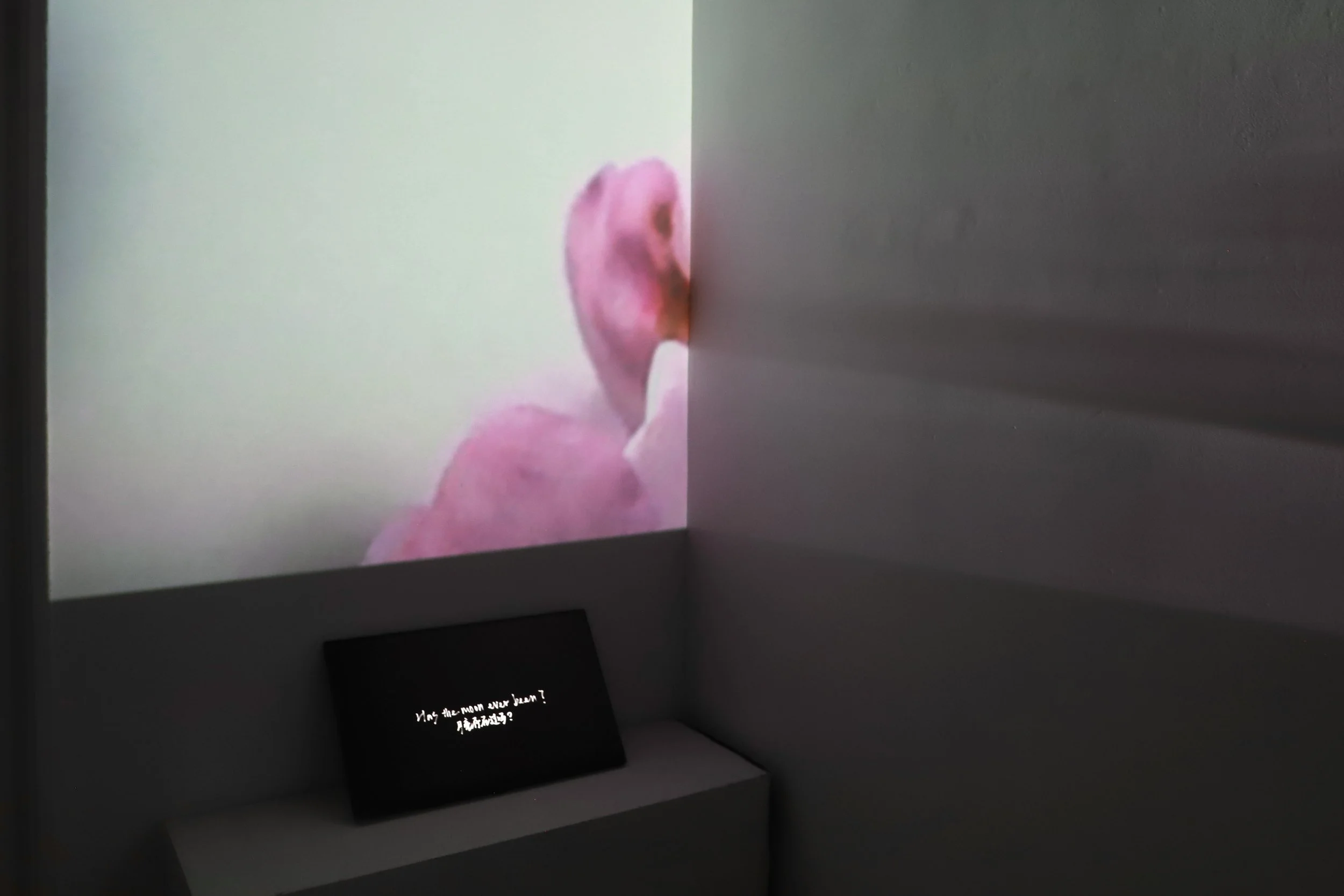
The visuals combine moving footage and still photograph, each carrying a different temporality. When these layers briefly align, a coherent structure emerges, only to dissolve when the sound pauses. The sound design is entirely AI-generated. Wind, water, music, and a voiceover cloned from my own voice explore dreams, consciousness, and reality. The technology's instability creates a murmuring quality, as if memory is speaking through another version of myself. All subtitles are handwritten. Their slight instability and trembling lines resemble words that appear in dreams—familiar and intimate yet not entirely grounded in reality. Phrases from my personal journals, such as “If dreaming outweighs waking…” and “Has the moon ever been?”, recur throughout the film, placing traces of my subconscious back into the imagery.
Installation:
Presented across two surfaces in an L-shaped corner. A large projection is stretched horizontally across two walls meeting at a 90-degree angle, wrapping the image around the viewer. On one of these walls, a floor monitor plays simultaneously, offering a second, smaller vantage point within the same space. Sound is delivered through wireless Bluetooth headphones.
Video C: Peace Piece I (6:42)
Peace Piece I is an experimental film that translates the auditory experience of Bill Evans’ eponymous composition into a visual language. Influenced by Debussy’s Romanticism, Evans brought these characteristics into jazz, creating a minimalist work whose melodic language evolves from simple diatonic melodies into complex, polytonal dissonance, all anchored by a repeated left-hand ostinato in a steady 4/4 time signature.
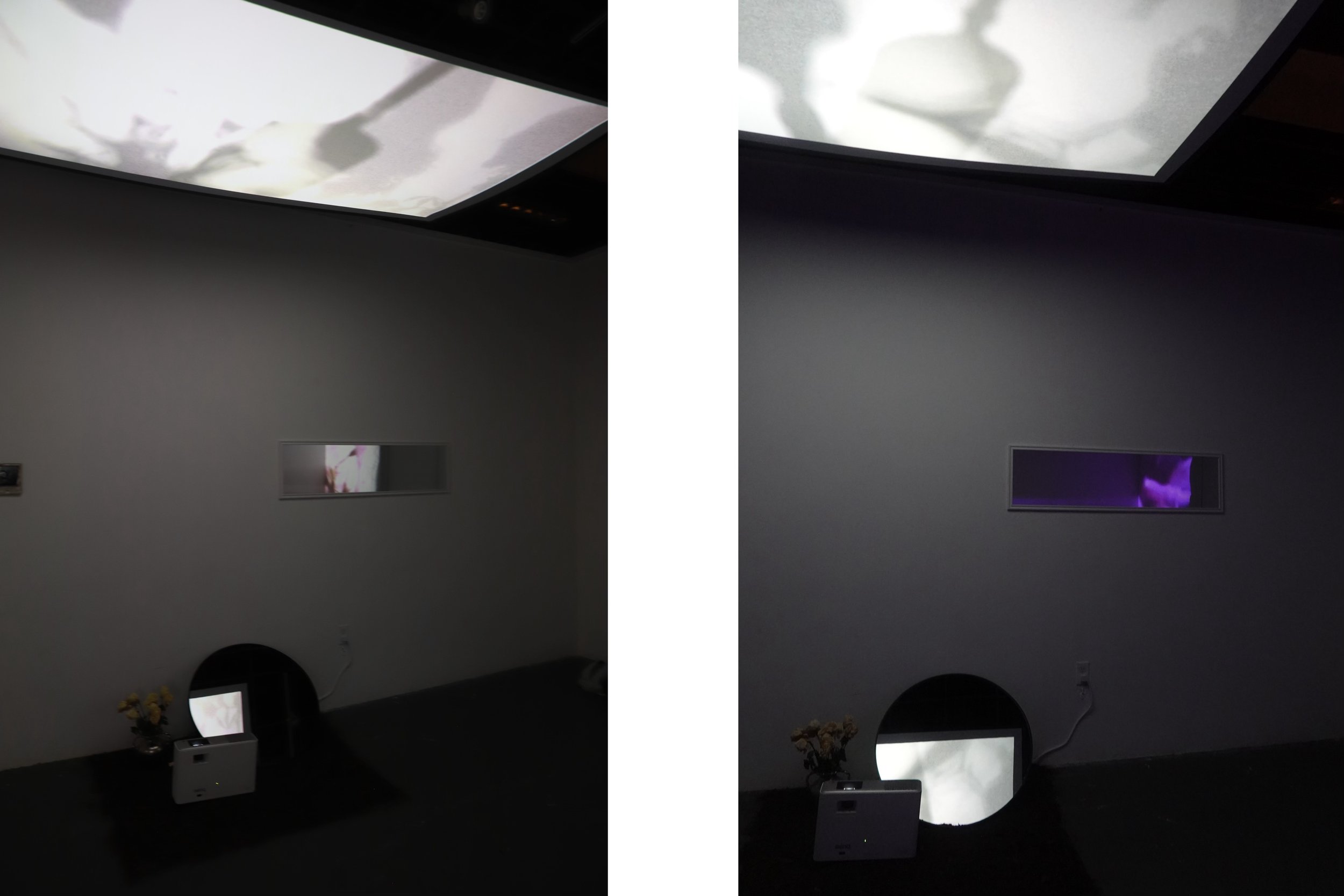
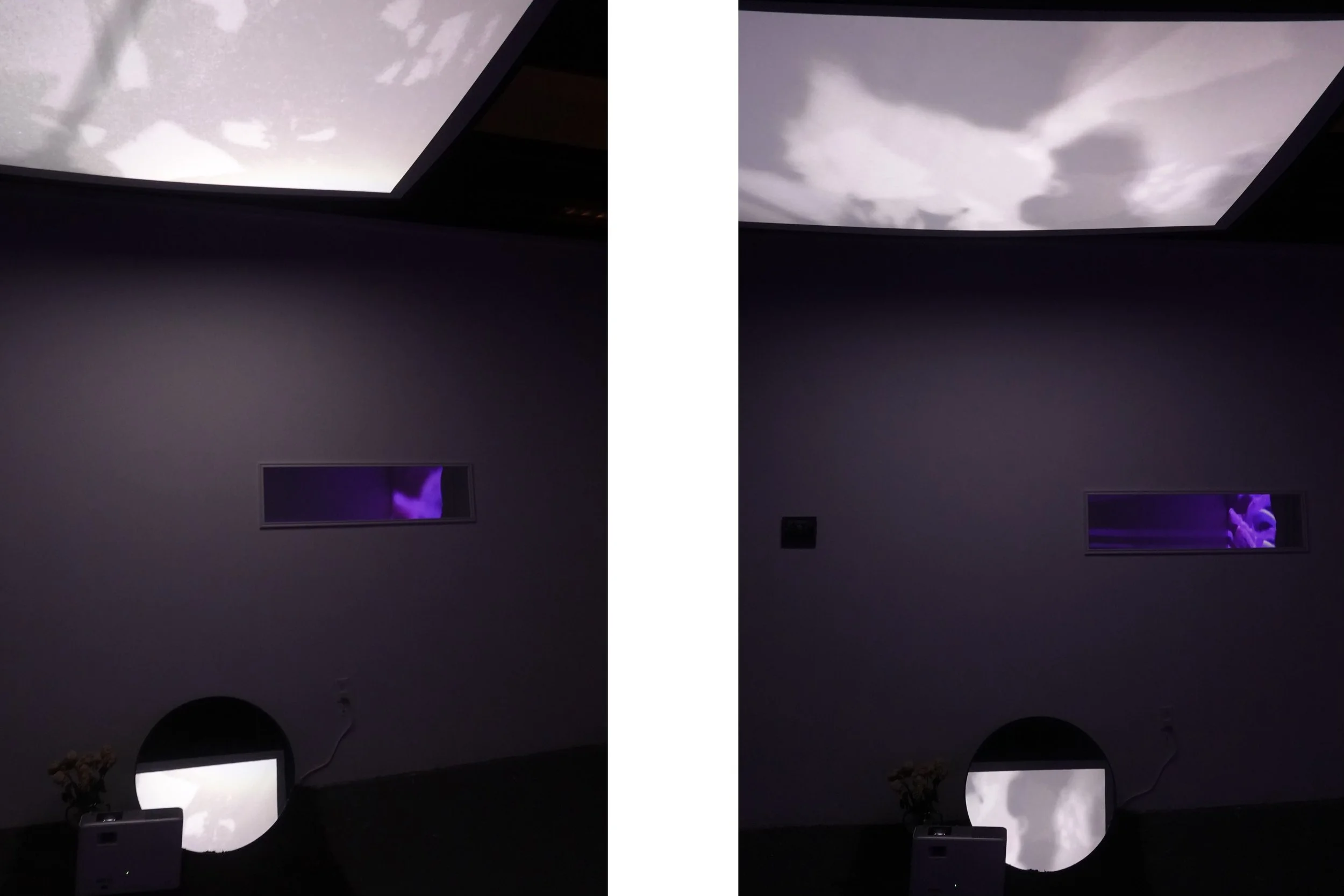
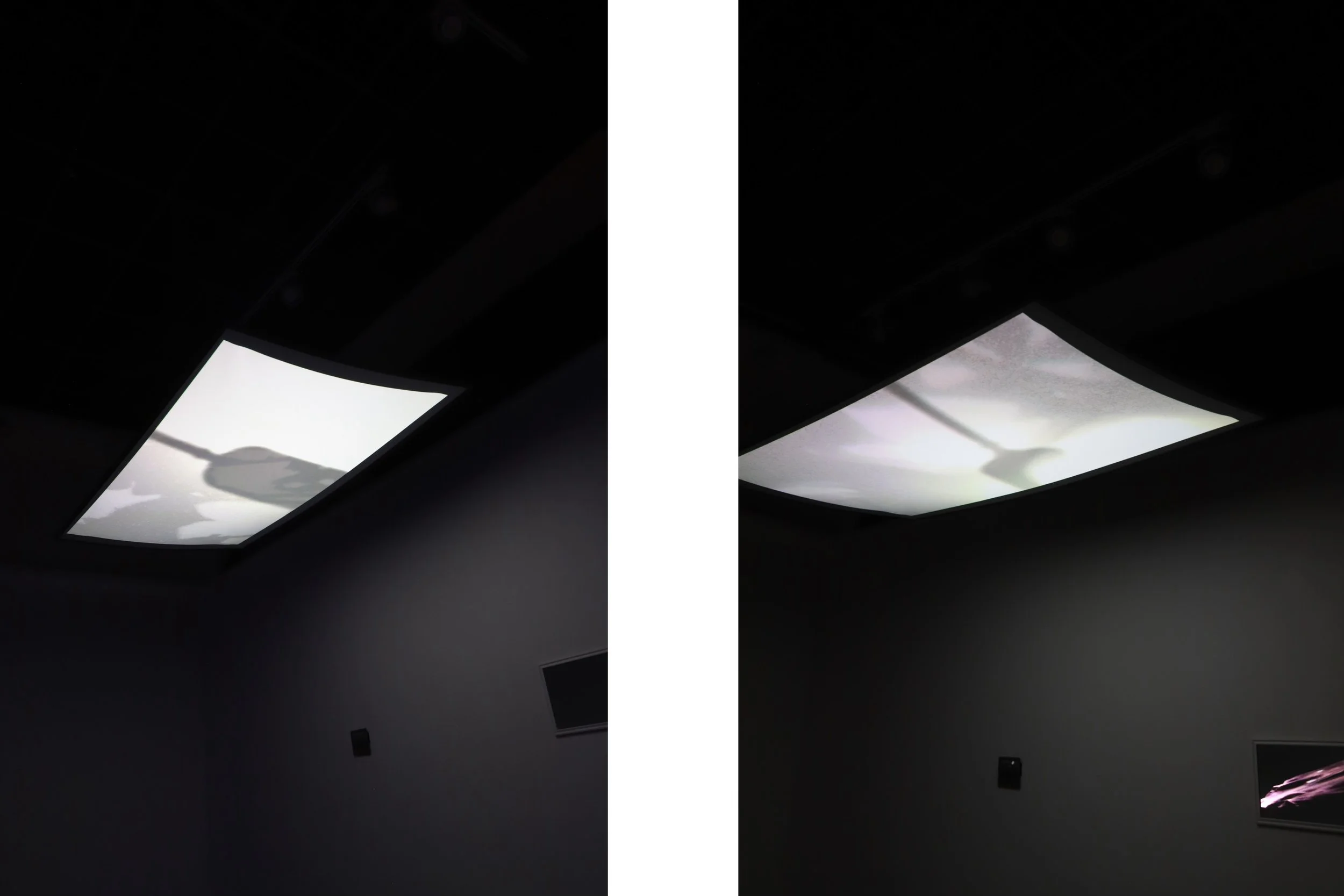
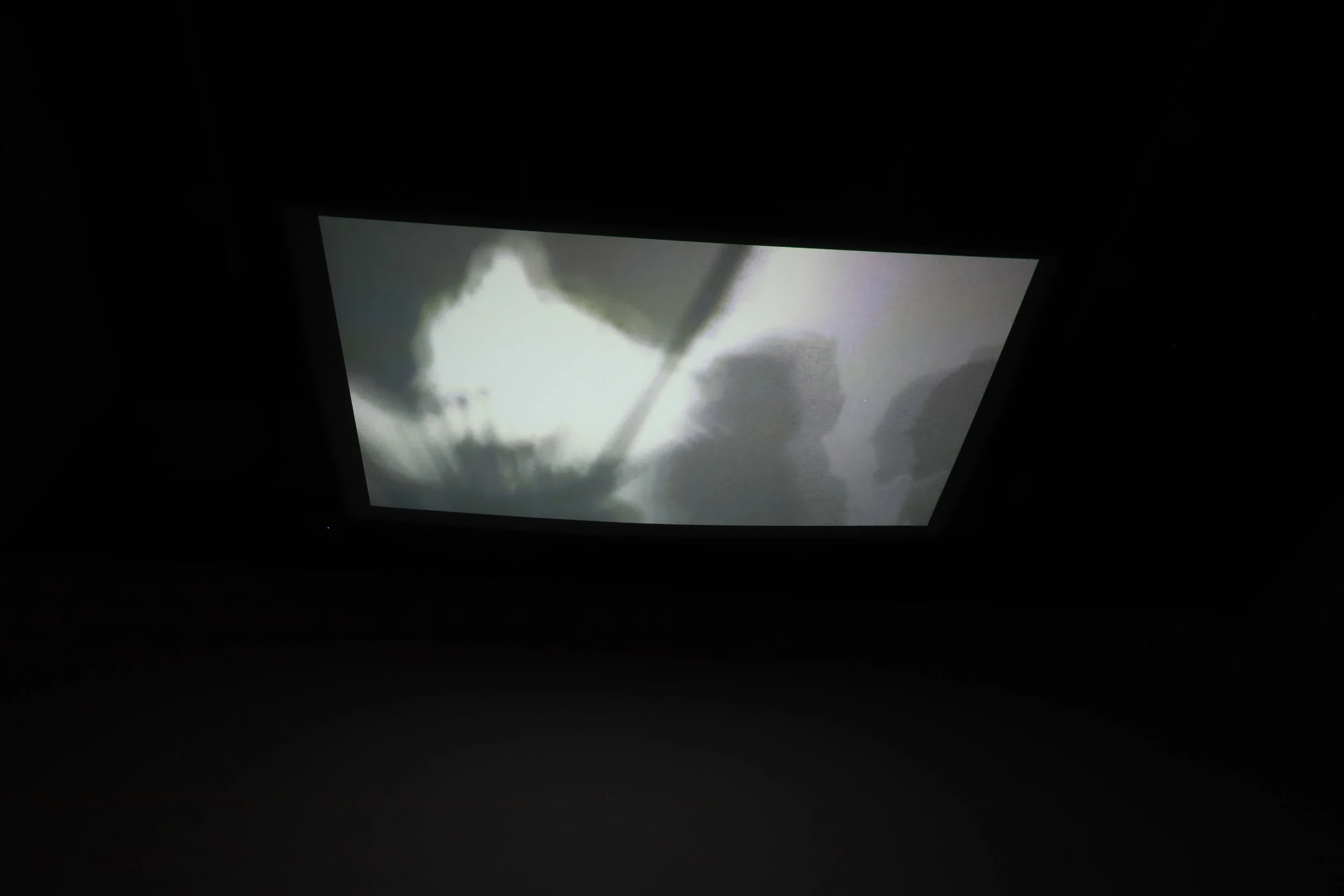
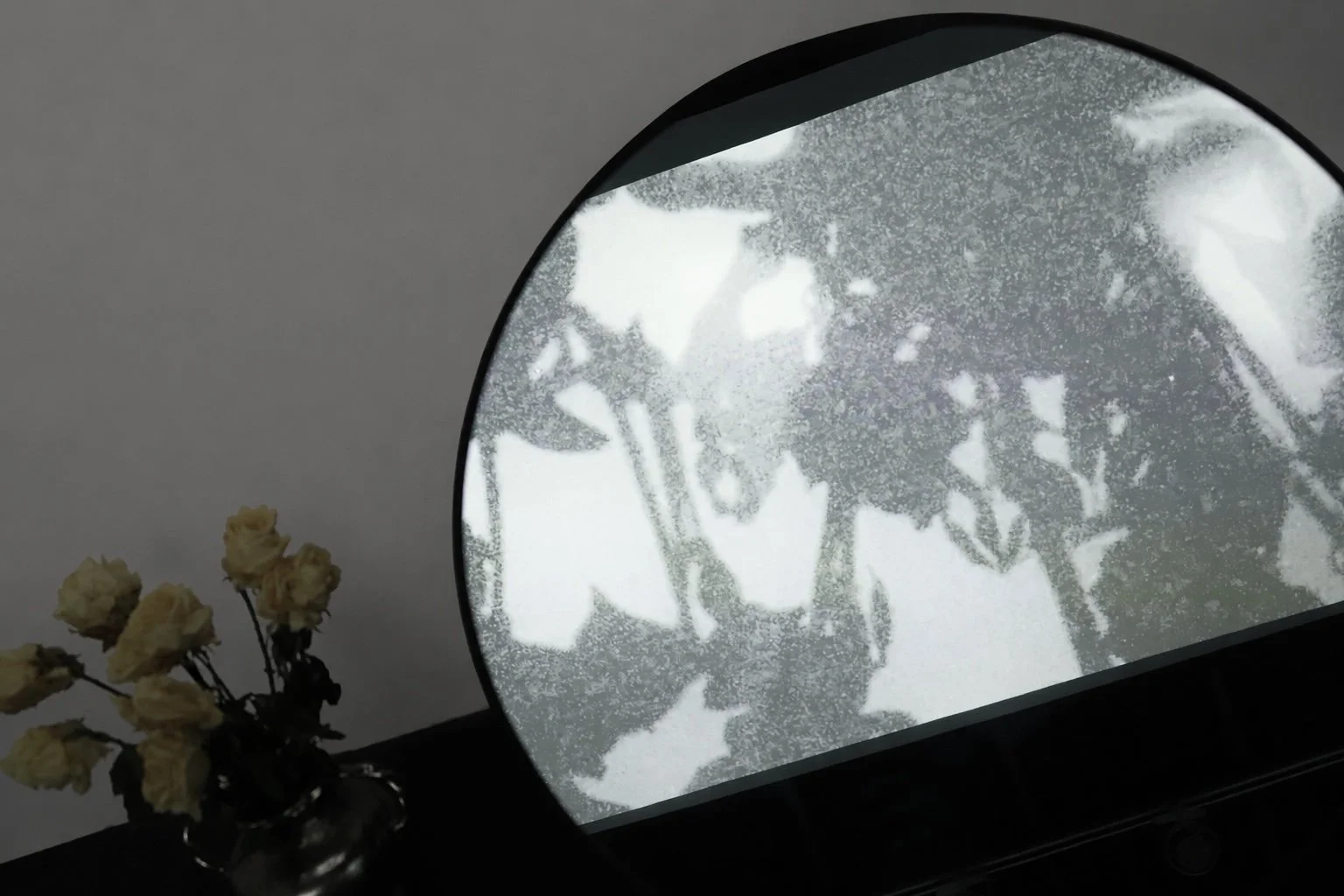
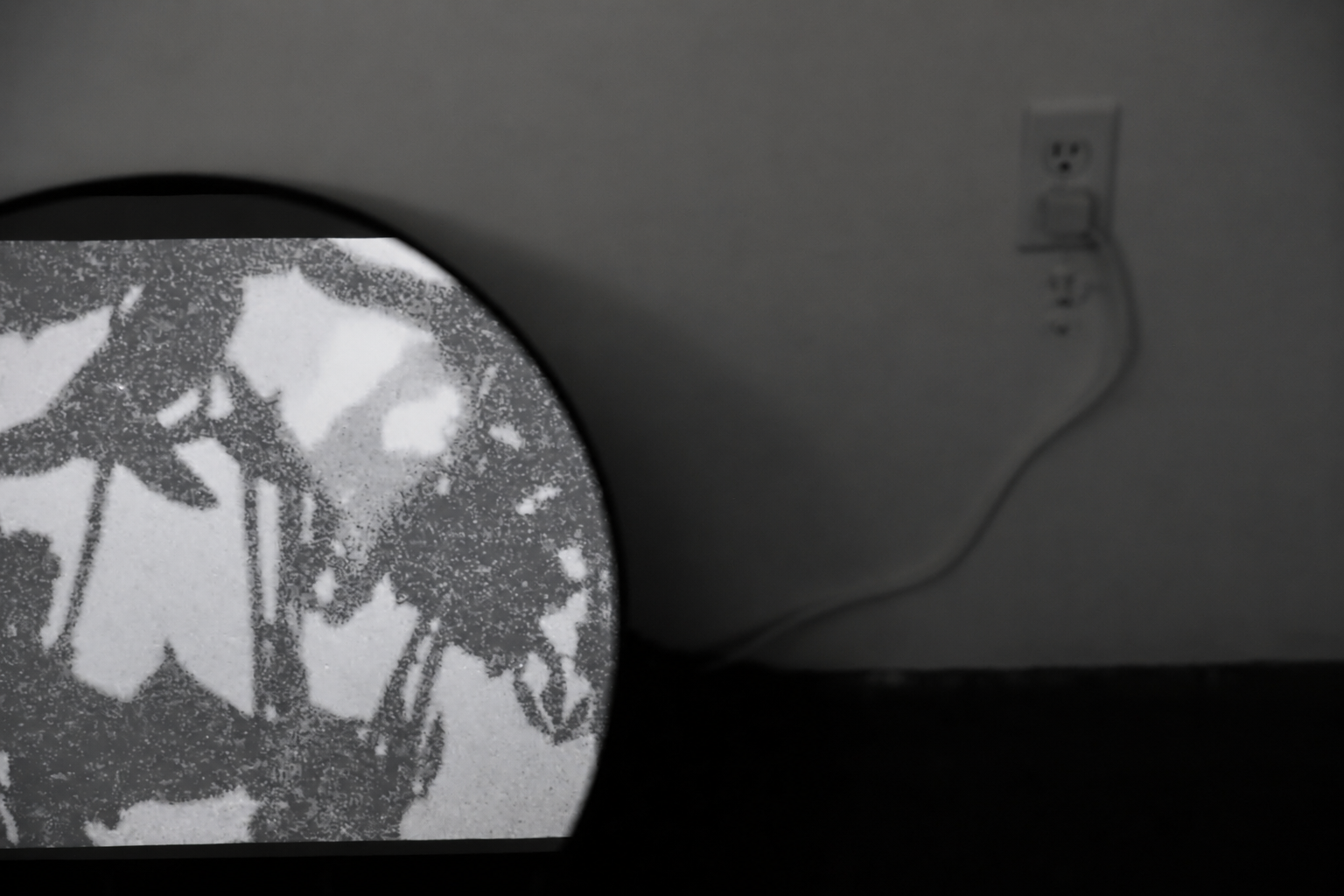
Viewing the left hand as a hearty breath and the right hand as a lingering dream, I filmed two tracks to simulate these high and low registers, overlapping them into a unified composition. For the bass register (left-hand chords), I filmed a ceiling chandelier. Acting as a stable anchor, I swung a flashlight in a steady pendulum motion for the entire 7-minute duration, allowing for natural, uncertain angles caused by my body. Evans’ agile right-hand treble delivers dreamlike improvisation across nine sections. I translated this using light intensity, multiple exposures for trills, and complex shadows for dissonant notes. Shifting the distance between the flashlight and dried flowers scales the shadows to mimic arpeggios. By filming static objects like dried flowers and a chandelier, I transform stillness into a fluid visual music where time becomes a stable, contemplative space.
Installation:
Projected from the floor upward onto a 100-inch horizontal “sky screen” suspended at 10 feet 2 inches above the ground by fishing line. A mirror leans against the wall at an angle on the floor below, tilted to catch both the sky screen above and Video B’s projection on the adjacent wall. At certain angles, viewers can look into the mirror and see the ceiling screen and Video B’s reflection simultaneously, while the sky screen itself remains visible overhead. Bill Evans’ original score plays openly in space, creating a soothing ambient presence. When viewers put on the wired or wireless headphones for Video A or Video B, Evans’ sound fades from their perception; removing the headphones brings it back.
By installing these three videos within the same physical space, the exhibition constructs time and space together as a unified experience of viewership.
The three videos carry no prescribed order and no hierarchy imposed by scale. The sequence in which the audience moves through them, the duration of their stay, and their choices of what to hear and what to watch all become part of the exhibition itself.
Moon Shaped Pool offers only the act of looking with no answers nor prescribed understanding.